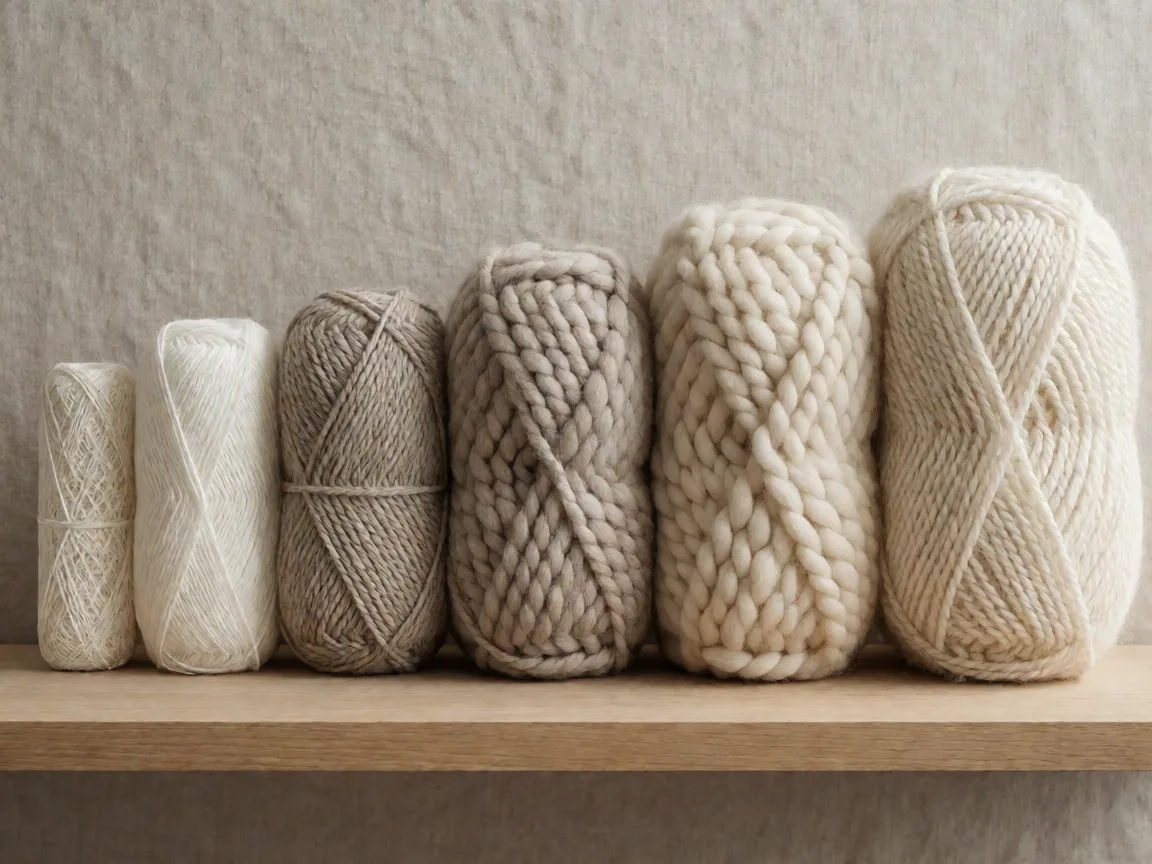
Almost every crochet failure that is not a tension problem is a yarn choice problem. The pattern says 4 ply and you buy “worsted”, the stitch comes out wrong, and the blame lands on your hands. It is not your hands.
Two facts do most of the work here. First, yarn weight controls stitch size — a heavier yarn makes bigger stitches on the same hook. Second, fibre controls drape and stretch — the same weight in cotton and in wool are different fabrics entirely. Brand is third on that list, and it is the one most people choose first.
What yarn weight means
Yarn weight is the thickness of the strand, and it is standardised. A number, a slash, and a unit: 4 / medium means four ply strands, medium category. The number is plies, the name is the CYC standard category, and the hook size pairs with them by convention.
Plies alone are misleading — a 4 ply loosely spun yarn can be thinner than a tightly spun 3 ply. The category name is the reliable signal, which is why patterns specify both.
The six weight families
| Name | Also called | Hook | Use it for |
|---|---|---|---|
| Lace | 1 / fine | 1.5–2.25mm | Delicate shawls, doilies |
| Super fine | 2 / sport | 2–3mm | Baby items, thin garments |
| Fine | 3 / dk | 3–4mm | Amigurumi, shawls, fine knits |
| Medium | 4 / aran, worsted | 4–5.5mm | Blankets, scarves, sweaters |
| Bulk | 5 / chunky | 6–8mm | Fast blankets, cushions |
| Super bulky | 6 / jumbo | 8–12mm | Rugs, very fast makes |
Two naming traps worth knowing. Worsted means 4 / medium in US terminology, but in UK terminology it refers to a spinning method — which is precisely why pattern terminology matters. And Chunky in UK language is 6 / jumbo, not 5 / bulk. When a British pattern says chunky, reach for the biggest yarn you have.
What fibre actually changes
Weight decides how big the stitch is. Fibre decides what the fabric does.
- Wool — elastic, warm, breathable, and it springs back into shape. The default choice for garments and anything that needs to fit a body. Merino is the smoothest and least itchy.
- Alpaca and mohair — warm with almost no stretch, soft, slightly haloey. They grow and relax over time, so expect a finished item to be slightly longer than measured.
- Cotton — no stretch at all, crisp, excellent stitch definition, and it drapes with weight. Amigurumi looks noticeably sharper in cotton. It also grows when washed.
- Acrylic — cheap, hard-wearing, no drape, no breathability. Fine for practice and blankets; poor choice for anything meant to drape.
- Bamboo and viscose — very good drape, silky, and cool. Loses some strength over time and is slippery to work with.
- Blends — usually the practical answer. A wool-acrylic blend keeps the elasticity and cost of acrylic with most of the warmth of wool.
The single most useful fibre fact for crochet: cotton and acrylic have no give, so increases and decreases show up as eyelets and puckers unless you work tighter or change hook size. Wool forgives. Cotton does not.
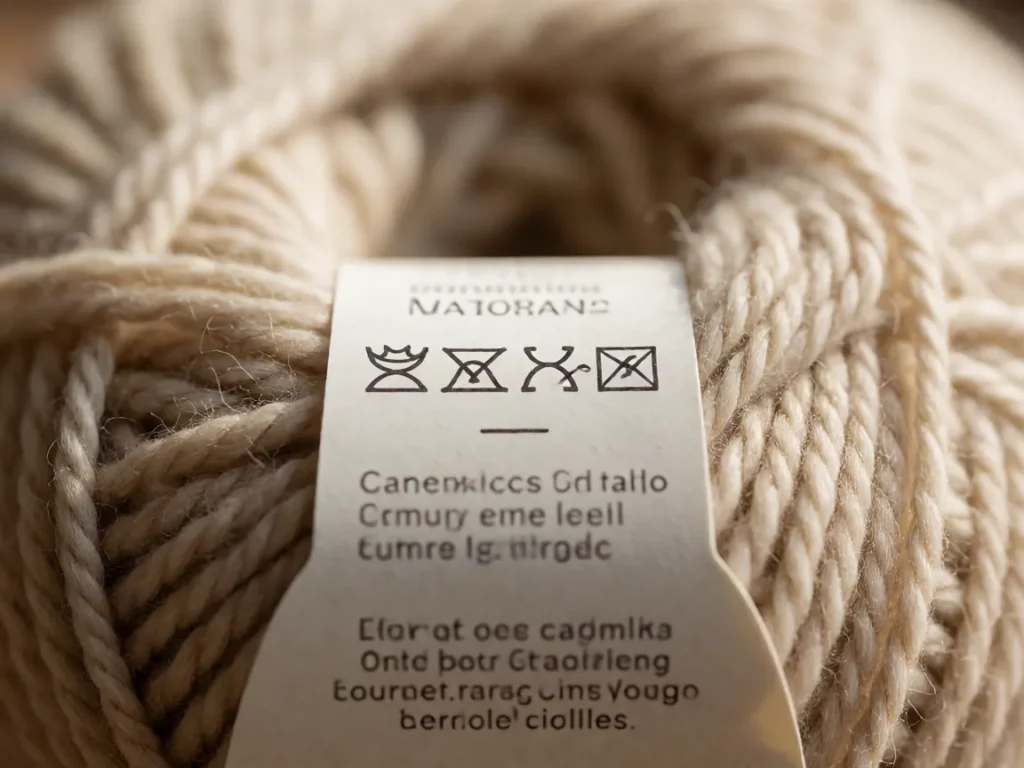
Reading a yarn label in ten seconds
You do not need to read all of it. You need four things:
- Weight — the number and the category name, side by side.
- Fibre content — listed by percentage, highest first. A label saying “70% wool, 30% nylon” is a wool yarn with added strength.
- Recommended hook or needle — a starting point, not a rule.
- Yardage per skein — this is what determines how many skeins you buy, and it varies enormously inside a single weight.
Everything else on the label is marketing. Winding direction genuinely matters — it affects twist memory and therefore how your fabric behaves — but the rest is decorative.
Substituting yarn: the rules that hold
Substitution is safe when three conditions are met: the weight matches, the fibre is the same family, and you check gauge. Change one of those three and you are designing, not substituting.
Yardage is the trap. Two medium-weight yarns can differ by a third in length per skein, and if the pattern’s quantity was calculated for a specific yarn, buy the yardage you need for the pattern and add ten per cent — not one skein of whatever looks similar.
Never substitute across fibre for a fitted garment. Wool stretches and adapts; cotton does not, and a cotton version of a wool sweater pattern will not fit the same body.
Frequently asked questions
What does the weight on the band actually tell me?
It tells you how thick the strand is, which is the single most useful thing on the label. What it does not tell you is how the yarn behaves. Two yarns in the same weight can differ in drape, recovery and how much they pill, and those differences change your gauge more than the weight does. Read the weight as a starting point and the fibre as the deciding factor.
The bands themselves are defined by the Craft Yarn Council yarn weight system, so the number on the band means the same thing in a shop in Madrid and a shop in Manchester.
Can I hold two strands together to get a heavier yarn?
Yes, and it is the quickest way to use up a yarn you already own. Two strands of the same weight worked together come out roughly equivalent to the next weight up. You will usually need a hook one size larger than the pattern calls for, because two strands sit looser in the hook than one. Check your gauge before you trust the result, since the finished fabric will be denser than a single strand would give you.
How do I check drape before committing to a sweater?
Work a 10 cm square in the pattern stitch, wash it the way the finished piece will be washed, and hang it. Drape is easier to judge by eye than by touch, and a swatch that you have squeezed into a ball tells you nothing. If it looks like the fabric you want when it hangs, the yarn is right.
Next steps
Yarn choice is a materials decision; the other half is stitch. Learn the four stitches in our crochet stitch glossary — single crochet and double crochet cover most patterns — then pick a project from our ten beginner patterns, all of which list the yarn weight and hook size they need.
Still deciding between two yarns? Tell me the fibre of each and the stitch you plan to use, and I will say which one to buy.